

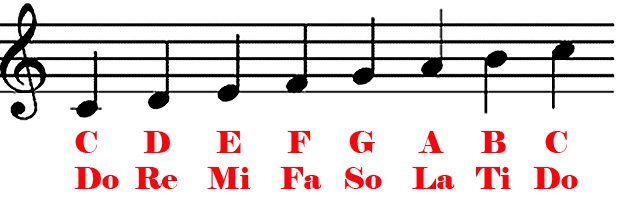
The term solfege may sound strange at first, but its idea is easy to understand once you know the basics. The solfege meaning is simply a way to name the notes in music so that singers and musicians can learn songs more easily. Instead of only using the letters A, B, C, D, E, F, and G for notes, solfege uses syllables like Do, Re, Mi, Fa, Sol, La, and Ti. These are easier to sing and help people remember where they are in a song. When the last note, Ti, is sung, the sequence starts again at Do, making a repeating pattern that feels natural for the voice.
What is Solfege and Why is it Important?
The solfege meaning is about connecting each pitch in music to a simple syllable. This makes it much easier to sing correctly, especially for beginners. If you have ever heard the song “Do-Re-Mi” from The Sound of Music, you already know the sound of the solfege scale. When you sing using solfege, you are not only practicing your voice, but you are also training your ear to hear the exact distance between notes. This skill is called ear training, and it is one of the most important abilities for any musician, whether they sing or play an instrument.
One reason the solfege meaning matters so much is that it can be used with or without instruments. Even if you do not have a piano or guitar, you can practice singing Do, Re, Mi, and so on, to improve your pitch accuracy. That is why solfege is often taught in schools, music classes, and choirs around the world. It works for all ages, and it has been used for hundreds of years to make learning music more fun and effective.
A Quick Look at the Solfege Syllables
Here is a simple table that shows each solfege syllable and the note it matches in the C major scale. This is one of the easiest ways to understand the solfege meaning.
| Solfege Syllable | Musical Note |
| Do | C |
| Re | D |
| Mi | E |
| Fa | F |
| Sol | G |
| La | A |
| Ti | B |
As you can see, solfege gives each note a name that is easy to sing. This makes it simpler for singers to hit the right pitch without always looking at sheet music. Once you learn these names, you can move them to other keys and still keep the same Do, Re, Mi pattern, which is part of the magic of solfege.
Fixed Do vs Movable Do
The solfege meaning can change slightly depending on the system you use. There are two main types: Fixed Do and Movable Do. In the Fixed Do system, Do is always the note C, no matter what key you are in. That means if you start on C, it is always Do, D is always Re, and so on. This system is often used in countries where music is taught using the note names in the local language.
In the Movable Do system, Do is always the first note of the scale, no matter what that note is. For example, if you are playing in the key of G, G becomes Do, A becomes Re, B becomes Mi, and so on. This makes it easier to think about the relationships between notes instead of their fixed names. Both systems still keep the same solfege meaning, but they are used for different teaching goals.
Benefits of Learning Solfege
Learning solfege is more than just memorizing syllables. The solfege meaning includes building a better ear for music. When you can sing a melody in solfege, you can also identify the notes when you hear them. This skill is called relative pitch, and it helps with tuning your voice or instrument. It also helps with sight-singing, which means looking at new music and singing it without hearing it first.
Another benefit is that solfege can make learning music fun. Many students enjoy singing the syllables because they feel playful and rhythmic. Teachers can use games, songs, and exercises to help students remember the Do, Re, Mi sequence. The solfege meaning also involves making music more accessible, so even someone with no instrument can practice and improve.
Solfege in Different Cultures
The solfege meaning is not only found in Western music. Many cultures have their own versions of a similar system. In India, a system called Sargam uses syllables like Sa, Re, Ga, Ma, Pa, Dha, Ni. In Japan, solfege is taught with almost the same syllables as in Europe, and in some African traditions, call-and-response songs use a similar naming style for pitches. This shows that the solfege meaning is universal — people everywhere understand that giving notes simple names makes them easier to learn and sing.
Here’s a table showing how solfege compares to other systems around the world:
| Country / System | Syllables Used |
| Western Solfege | Do, Re, Mi, Fa, Sol, La, Ti |
| Indian Sargam | Sa, Re, Ga, Ma, Pa, Dha, Ni |
| Japanese Solfege | Do, Re, Mi, Fa, So, La, Ti |
| Indonesian | Do, Re, Mi, Fa, Sol, La, Si |
How to Practice Solfege
If you want to learn solfege, start with the C major scale. Sing the syllables slowly, making sure each pitch is clear. The solfege meaning becomes clearer when you can connect each sound with the right syllable. Once you feel comfortable, try singing backward from Do down to Ti, La, and so on. This helps your memory and improves your ear.
You can also practice with a piano or a free digital keyboard app. Play a note and match it with the correct solfege syllable. Record yourself singing and listen back to check if your pitch is correct. Over time, the solfege meaning will become second nature, and you will start to hear Do, Re, Mi in songs without even trying.
FAQs about Solfege Meaning
1. What is the solfege meaning in simple words?
It means naming music notes with easy syllables like Do, Re, Mi to help with singing and learning.
2. Is solfege only for singers?
No. The solfege meaning works for both singers and instrument players because it trains the ear.
3. What is the difference between Fixed Do and Movable Do?
In Fixed Do, Do is always C. In Movable Do, Do is the first note of any scale.
4. Can children learn solfege easily?
Yes. The solfege meaning is simple, and kids enjoy the playful sound of the syllables.
5. Do all countries use solfege?
Not exactly. But many countries use similar systems with the same idea as the solfege meaning.
Conclusion
The solfege meaning is more than just a list of syllables. It is a complete system that helps people learn music faster, remember notes better, and improve their sense of pitch. Whether you use Fixed Do or Movable Do, the idea stays the same: give each note an easy name so it is simpler to sing and understand. By practicing solfege, you build strong musical skills that last a lifetime. Across the world, from classrooms to concert halls, the solfege meaning continues to help musicians of all ages enjoy the beauty of music.
